Achieving information access equity: using AI in the fight against Corona
How one of the winning teams of the #SmartDevelopmentHack built an AI-driven chatbot that has answered millions of COVID-19 questions for Rwandans in Kinyarwanda, English and French.
frica continues to face a growing burden of communicable and non-communicable diseases due to inadequate health infrastructure, regional disparities of medical resources, and a lack of adequate health-related information communicated to local populations. These conditions have been further accentuated by the COVID-19 pandemic. Lack of actionable, easy-to-understand and up-to-date pandemic information has fuelled continued spread of the virus in both rural and urban communities — and with only 2% of Africans fully vaccinated at the time of writing, the continent risks new waves.
Supporting the fight against COVID-19 through digital solutions
To address the spread of the pandemic in low- and middle-income countries, BMZ together with partners from the EU Commission, other EU member states, tech companies and civil society organised a hackathon dubbed the #SmartDevelopmentHack. From it, various digital solutions emerged — one of them the Rwanda Biomedical Center (RBC) Mbaza chatbot, built on natural language processing (NLP) to allow information access through text or voice. Chatbot technology has proven its worth during the corona virus crisis, as attested by its use at the WHO and the CDC.
Launch of the RBC Mbaza chatbot
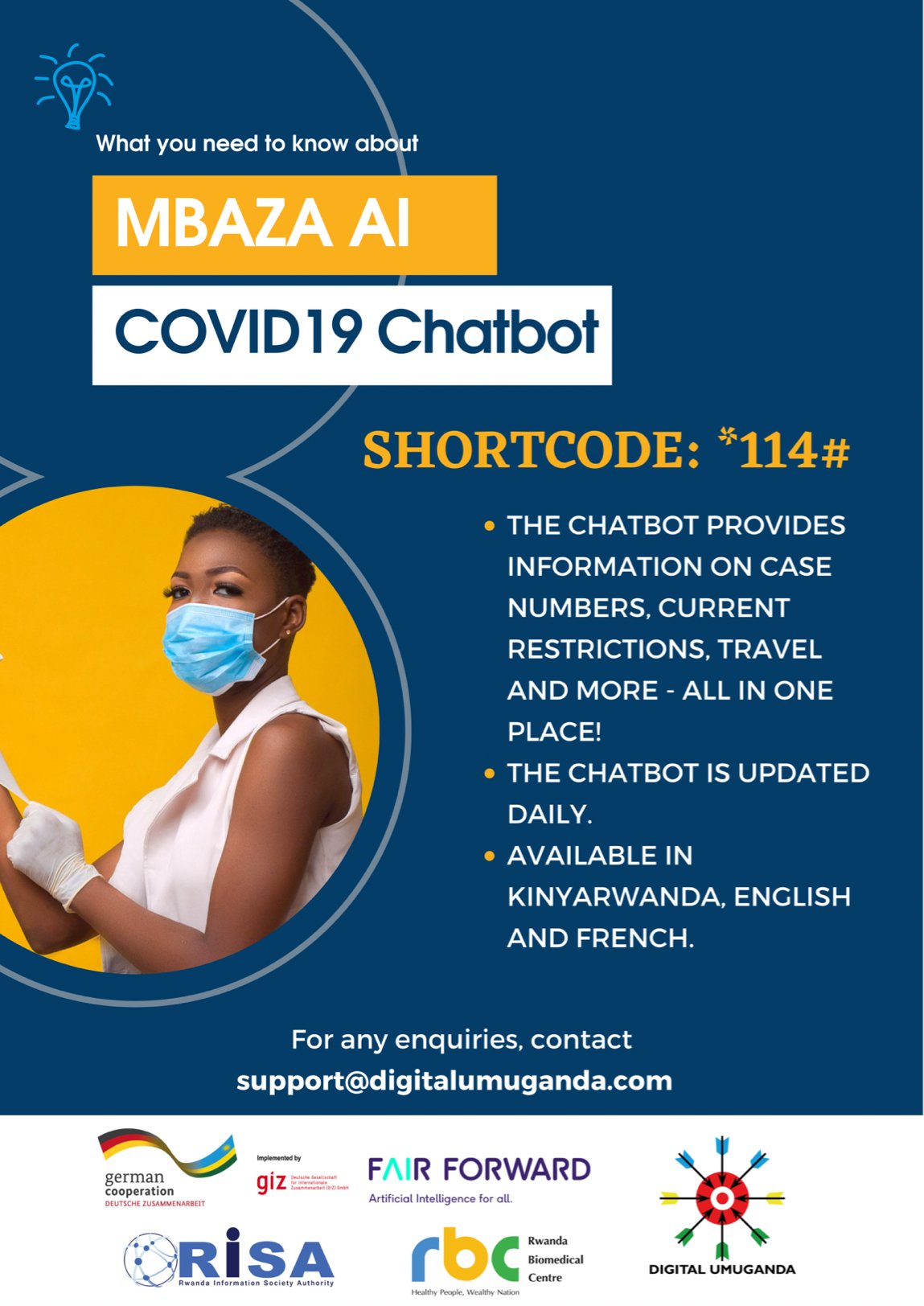
The RBC-Mbaza chatbot is currently accessible via the USSD short-code *114# in Rwanda. It is a menu-based solution that provides Rwandans with daily statistics on cases and vaccinations, symptoms and prevention methods, and guidance on what to do if someone has tested positive. It also explains the prevailing government restrictions — available in the three official national languages: Kinyarwanda, English and French. "The aim is to provide accurate and timely information to the majority of Rwandans and Rwandan residents to help them take healthier decisions and curb the spread of COVID-19," said Dr Sabin, Director General of the Rwanda Biomedical Centre.
The Mbaza project is developed by a consortium that includes GIZ, Digital Umuganda, Arxia, Mozilla and RISA. The second iteration of the project will let users type individual questions instead of choosing from a pre-defined menu, and ultimately deliver a voice-based chatbot Rwandans can simply call.
Local languages are key
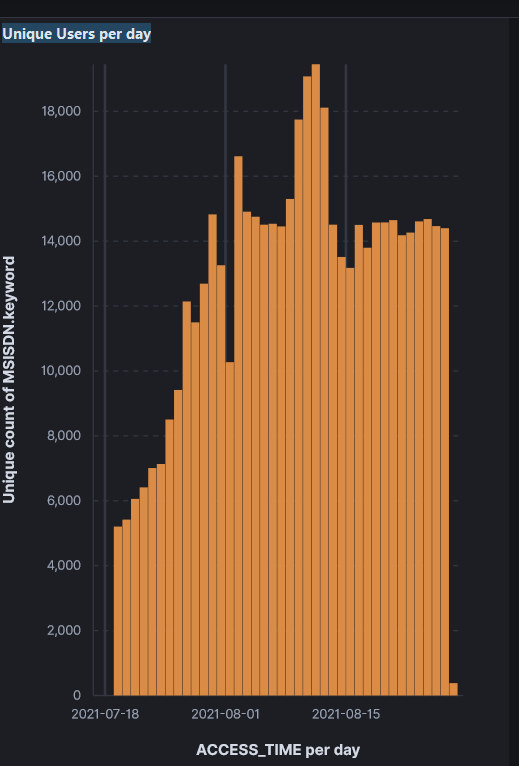
The success of the chatbot validated a core assumption: when information is provided in local languages through channels everyone can access — regardless of connectivity — we can achieve information access equity and bridge the digital divide. In the last 25 days, over 340,000 people have used the chatbot with more than 3.2 million inquiries. On average, the chatbot serves more than 13,000 individuals daily, recording upwards of 129,000 inquiries. The chatbot is now being scaled up to include new use cases, starting with vaccination appointments.
In a world increasingly characterised by enhanced connectivity, Africa has a unique opportunity to leverage AI to achieve health-related information access equity. Africa cannot, and should not, be left behind.
— From the field