Funding your startup — 5 instruments you could explore in Rwanda
Raising capital is one of the hardest tasks for any founder, and harder still in Africa. A walk-through of the five main funding instruments available to Rwandan startups, with the trade-offs of each.
aising capital to finance a startup's operations is undoubtedly one of the most challenging tasks of any founder. The challenge gets even bigger for African founders. According to *The Better Africa: tracing success and failure of African startups* report by the GreenTech Africa Foundation, more than 50% of African startups that shut down have never received any external funding. Many cannot scale their markets because of the scarcity of funding opportunities. This article walks through the various instruments you could use to secure the funding you need.
1. Take on debt and pay it back later
Conventionally, banks and commercial lenders are the mainstream debt funders for business owners — although lenders can also be non-bank entities if they hold the proper licences to operate in Rwanda. Bank requirements and the strings attached to loans (interest rates, grace and payback periods, collateral) usually hamper the ability of startups and innovative, market-oriented projects to secure funding. Banks require extensive documents and assets before they approve a loan; they typically want a business plan, collateral, a managerial track record and a good credit score. For startups still searching for product-market fit, conventional debt is rarely the right first move.
2. Trade equity for capital
Equity investors take an ownership stake in your company in exchange for capital. The strength of this route is alignment: investors do well when you do well, and they usually bring networks, governance and operational support alongside the money. The trade-off is dilution and loss of full control. For Rwandan founders, equity capital typically comes from angel investors, regional VC funds, or strategic corporates entering the market.
3. Pursue grants and challenge prizes
Grants and challenge prizes are non-dilutive — you don't give up equity and you don't pay back capital. They are particularly relevant for startups working on social impact (health, agriculture, climate, gender). The catch is that grants take time to design, apply for and report against, and they rarely arrive at the moment you need cash. Treat grants as a complement to other instruments, not a primary engine of growth.
4. Use mezzanine instruments — convertible notes and SAFEs
Mezzanine financing sits between debt and equity. One typical form is the convertible note: an investor provides debt capital with the promise that it converts into equity shares if the startup hits a certain milestone. SAFEs (Simple Agreement for Future Equity) — a structure coined by YCombinator — target only the future shares to be offered by the startup, without an initial debt component. Because of their simplicity, SAFEs are typically riskier than convertible notes for experienced investors, but effective for raising capital through a trusted network such as friends and family.
5. Share your revenues — loyalty-based financing
Also known as revenue-based financing, this is neither a debt nor an equity investment. The investor receives a percentage of the startup's ongoing revenues in exchange for the funds invested, until a total agreed amount has been repaid — usually 2–3 times the initial investment. It is risky for investors since repayments are directly proportional to your financial performance, but it gives them an opportunity to secure a lucrative deal should sales skyrocket.
How to select the best instrument for you
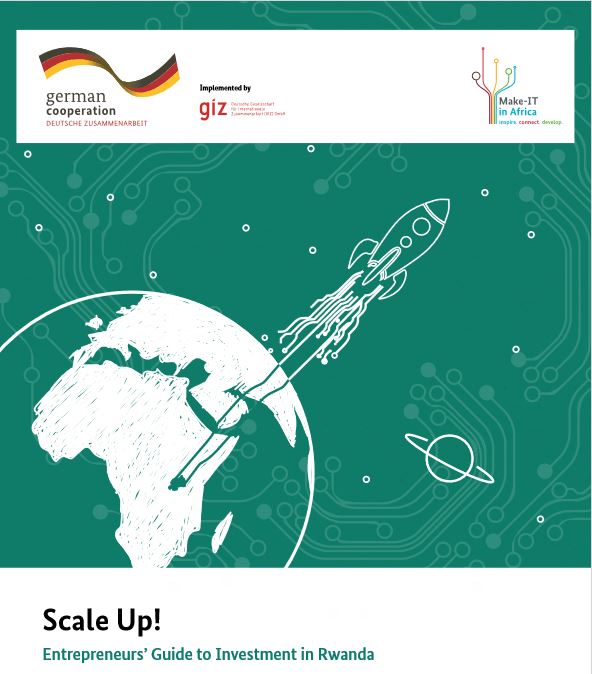
You can bootstrap your startup as far as you can. Sometimes, however, your startup needs external funding to stabilise or scale. The truth is that any of these five instruments could be a great fit in the right context. Securing funding is not just about the instrument; it is about the network of people and organisations you approach and how you articulate the need. It is also about the internal readiness of your startup (e.g., having your books in order), and about the investment scene at ecosystem level — opportunities, threats, laws and regulations. To understand comprehensively how these factors come together, see Make-IT in Africa's *Entrepreneurs' Guide to Investment in Rwanda*.
— From the field